Cannavarella Estate : Nurturing Land, People and Heritage Since 1880
Established in 1880, Cannavarella Estate stands among the most historically significant plantations in Sri Lanka, carrying a legacy that intertwines agricultural heritage, colonial transitions and modern development.
Its story begins with the cultivation of chinchona, a medicinal bark used to produce quinine, which is a vital treatment for malaria at the time, introduced when coffee estates across the island were failing.
Under the ownership of Messrs Macfarlane, Cannavarella rapidly gained a reputation for producing chinchona at ideal elevations between 4,000 and 5,000 feet above sea level.
At that time, the estate spanned around 750 acres and played a pivotal role in the island’s shift from coffee to alternative plantation crops during the late 19th century.
A transformative chapter began when Christopher B. Smith purchased the property and unified several surrounding estates - Moussagolla, Cannavarella, East Gowerakelle, and Naminacooly - into what became known as the Cannavarella Group.
This amalgamation created a vast holding of approximately 1,800 acres.
By 1915, nearly 1,512 acres of this extent were cultivated in tea, marking the estate’s full transition from chinchona to the crop that would define its identity for generations.
The Group was managed by the Eastern Produce and Estates Company from 1915 until 1964, after which stewardship passed successively to Walker & Sons Company Ltd, and then to George Steuart Company Ltd by 1969.
A defining moment in the estate’s history arrived in 1971 when Sir Oliver Goonetilleke, former Governor General of Ceylon, acquired the estate.
Under his ownership, it came under the London-based company Ceyover Ltd., a name derived from “Cey” for Ceylon and “Over” for Oliver.
The estate remained under private ownership until the nationalisation wave of 1975, during which Cannavarella was brought under the Janatha Estates Development Board (JEDB).
For nearly two decades it was managed under government purview until the plantation sector was re-privatised in 1992.
Thereafter, Cannavarella Estate moved under the management of Namunukula Plantations Limited, first through BC Plantation Services, then under John Keells Holdings’ Keells Plantation Management Services and eventually under the ownership of Richard Pieris & Company PLC, where it continues today as part of the Arpico Plantations portfolio.
Blending Heritage, Landscape and Community
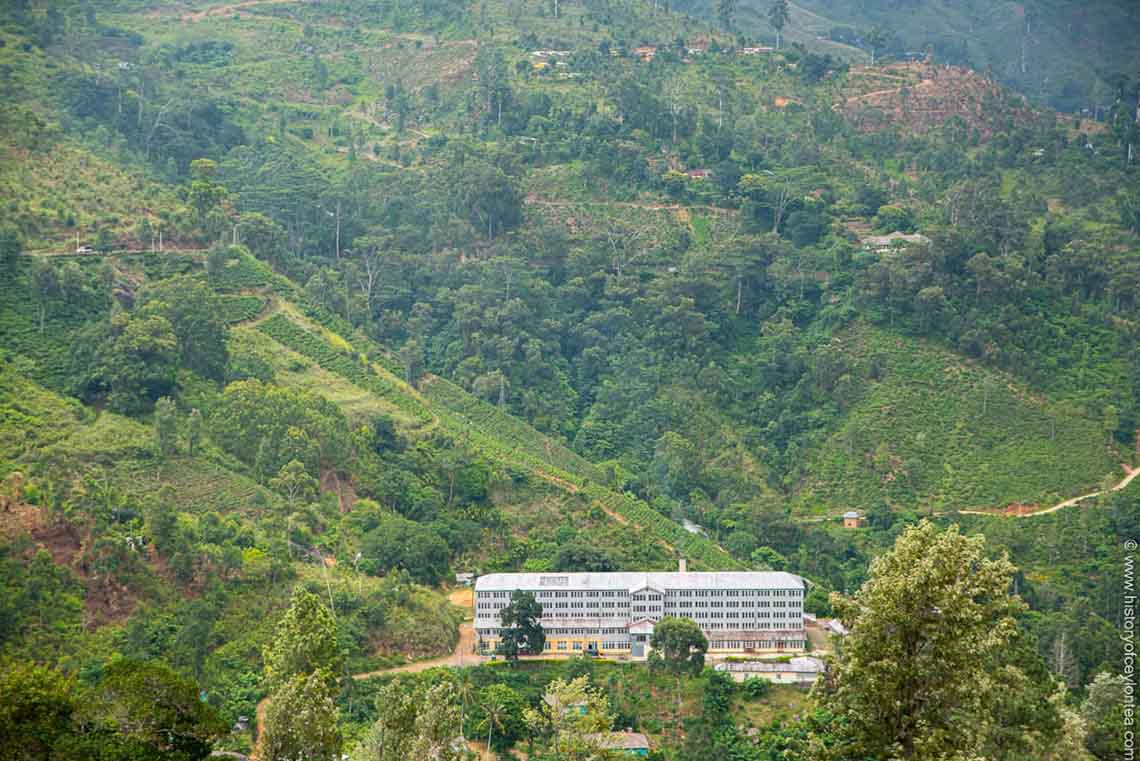
Situated along the northeastern slopes of the scenic Kabralla-Moussagolla range and bordering the Namunukula mountain range, Cannavarella Estate spans a total extent of 800 hectares.
Its six divisions rise across elevations from 910 to 1,320 metres above sea level, creating a landscape ideal for cultivating premium high-grown tea.
Of the total land area, 351 hectares are dedicated to mature tea, while 54 hectares consist of VP tea, representing 16 % of the estate.
Among its most remarkable features are fields containing seedling tea bushes more than a century old, living symbols of Sri Lanka’s plantation legacy that continue to thrive across the slopes.
The estate is also home to the origin of the Manik River, which begins its journey in the Moussagolla Division, adding an ecological richness to Cannavarella’s natural environment.
Cannavarella’s history of leadership reflects broader transformations within the plantation industry.
The last English superintendent, Mr. Charles Edwards, oversaw the estate during the final phase of British management.
In 1972, he was succeeded by Franklin Jacob, who became the first Sri Lankan superintendent of the Cannavarella Group, marking a shift toward local leadership and expertise in plantation management.
Development within Cannavarella Estate has never been confined to agriculture alone.
Over the past decade, the estate has strengthened its emphasis on community care, diversification and improving living conditions for its workers.
In 2022, coffee planting was initiated in Fields 7 and 8 of the NKU Division, covering 2.5 hectares as part of a broader effort to introduce alternative revenue streams while complementing tea cultivation.
The estate’s commitment to early childhood development is reflected in the initiation of a morning meal programme across all Child Development Centres from 2025, ensuring that children receive nutritious meals each day.
A newly constructed Child Development Centre in the EGK Division, completed in 2020, now offers modern facilities including a play area, study room and kitchen, symbolising the estate’s dedication to nurturing the next generation.
In 2015, a housing scheme consisting of 23 new homes was completed and handed over to workers in the CVE Division, significantly improving quality of life and providing families with safer, more stable living environments.
A Future Built on Stability and Renewal
Cannavarella Estate is preparing to undertake one of its most important social development initiatives.
A major housing programme has been proposed to relocate 69 families currently residing in landslide-prone areas of the Moussagolla Division.
Supported by the Indian Housing Programme, this effort aims to provide secure, sustainable housing in safer terrain, ensuring long-term stability for vulnerable families and reducing disaster risk in the region.
Across its history, Cannavarella Estate has remained a landscape shaped both by the land and the people who call it home.
Cannavarella continues to honour its roots while building a modern legacy that uplifts both the estate and its people.
Latest Posts












Video

K9 unit flown by Emirates SkyCargo to Zimbabwe begins frontline operations
Vega and Kuda, two specialist conservation dogs, transported by Emirates SkyCargo from London to Harare via Dubai in partnership with UK charity Dogs 4 Wildlife, have arrived safely and acclimatise