Nitesh Banga of Virtusa On How Artificial Intelligence Can Solve Business Problems
In today’s tech-driven world, artificial intelligence has become a key enabler of business success.
But the question remains — how can businesses effectively harness AI to address their unique challenges while staying true to ethical principles?
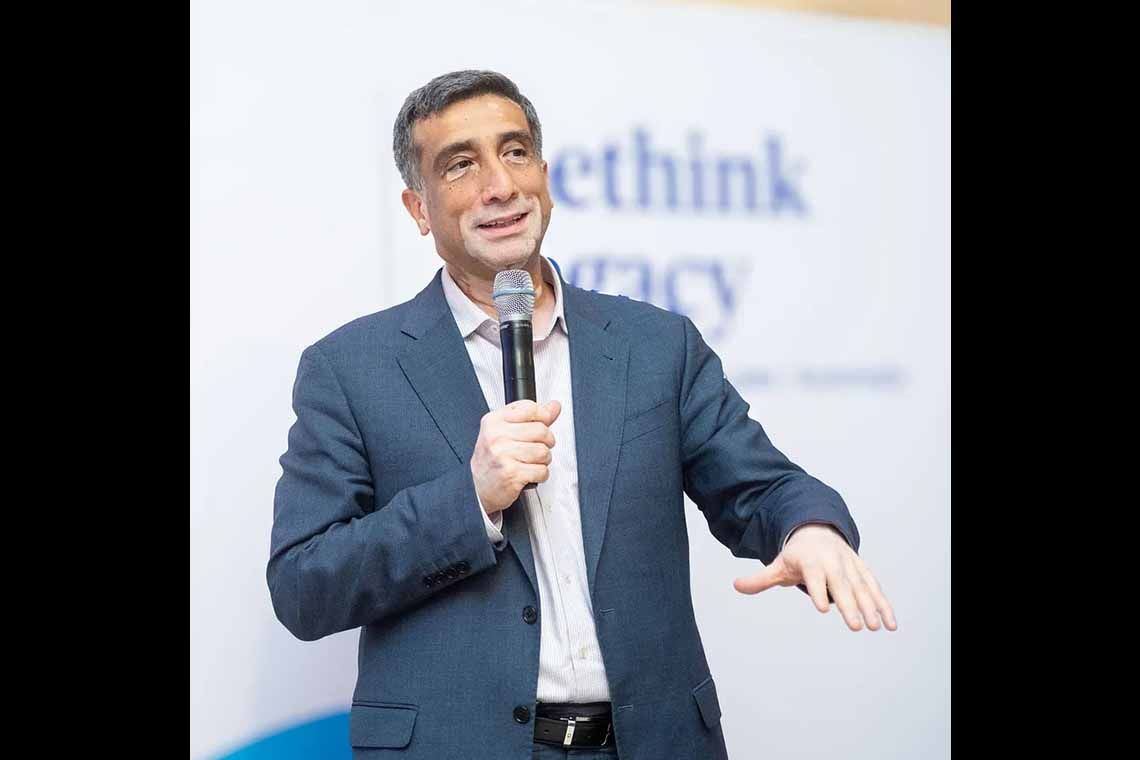
To explore this topic further, we are interviewing Nitesh Banga.
Nitesh Banga is the Executive Director and CEO of Virtusa, a product and platform engineering services company reimagining experiences and driving business transformation with technology.
He has nearly three decades of leadership experience in the IT services industry, having held senior leadership roles responsible for driving growth and operational excellence at global enterprises, including GlobalLogic and Infosys.
Today at Virtusa, Nitesh is focused on promoting an AI-first culture and helping clients move from experimentation to measurable business payoff with AI.
Thank you so much for joining us! Can you share with us the backstory about what brought you to your specific career path in AI?
Throughout my career, I’ve watched technology evolve from a behind-the-scenes efficiency tool to the core engine of modern enterprises.
When I began my career as a software developer, technology was used primarily to automate back-end tasks.
Over the past three decades, my career has moved from engineering to business leadership.
In that time, I’ve worked closely with global organizations as they’ve shifted from using technology to cut costs toward using software and data to create entirely new business models.
Today, with the rise of AI, technology has achieved first-class citizenship in the business world and become the enterprise itself.
In my new role at Virtusa, I’m drawing on my engineering training and industry experience to lead our organization through this inflection point as we reimagine how work gets done.
Can you share the most interesting story that happened to you since you started working with artificial intelligence?
More than one specific story, the most interesting thing that’s happened to me since I started working with artificial intelligence is the shift in conversations I’m having with clients.
Every day at Virtusa, I’m having conversations with clients that I never thought I would have 5 or 10 years ago.
With the rapid adoption of AI and GenAI, we’re reevaluating the fundamental nature of our clients’ business models and the changes they can make to take advantage of this technology.
No longer are we just automating or optimizing parts of the enterprise, we have the opportunity to reimagine the enterprise itself.
And I believe what we do with this opportunity will be the most interesting chapter of my career.
You are a successful leader in the AI space.
Which three character traits do you think were most instrumental to your success? Can you please share a story or example for each?
I’ve relied on a combination of curiosity, human-centered thinking, and my philosophy of zero-distance leadership throughout my career.
Curiosity
Knowing how technology works is fundamental to recognizing its opportunity, not just its capabilities.
This is especially true with AI, where understanding its foundations helps leaders make better decisions about where and how AI should be applied.
My background in engineering helps me stay close to the technical aspects of our business, but curiosity about our clients’ work is what enables Virtusa’s domain-driven approach that combines expertise across industry, technology, and specific business context.
This approach ensures that AI is more than a tool; it’s a finely tuned instrument grounded in the nuances of each business.
Human-centered thinking
As we enter the era of agentic AI, the best technologists must also be humanists.
At Virtusa, we evaluate AI solutions through the lenses of desirability, feasibility, and viability to ensure technologies are grounded in human insight and real business needs.
By embracing human-centered design, we can go beyond integrating AI into workflows and use it to reimagine processes to make everyday experiences better through technology.
Zero-distance leadership
At Virtusa, I work to peel back the layers between leaders, teams, and customers, so decisions are made quicker and based on real needs.
I call this approach zero-distance leadership.
By staying close to the real problems, ideas move freely and innovation remains grounded.
Can you share a specific example of how you or your organization used AI to solve a major business challenge? What was the problem, and how did AI help address it?
We solved a major business challenge at a large financial institution by building an AI-driven, multi-agent system.
Explaining anomalies in Risk-Weighted Asset (RWA) calculations was previously a manual, slow, and non-scalable process, requiring specialist analysts to spend anywhere from 30 minutes to 6 hours investigating across up to 10 data systems.
The deep-agentic architecture was engineered to mirror this expert workflow, replicating the analyst’s reasoning chain and pulling evidence from 10+ data sources.
The system generates an audit-ready reasoning trace, ensuring transparency and compliance while safely automating the reasoning process at scale.
The average time to explain an RWA anomaly was reduced from 2–6 hours to 5–10 minutes, and analyst effort per query became 80% automated.
What are some of the common misconceptions you’ve encountered about using AI in business? How do you address those misconceptions?
One of the biggest misconceptions is that AI bolted onto a business can solve every problem.
That mindset is the reason many enterprises have poured billions into AI initiatives yet remain in the proof-of-concept phase.
The truth is that AI without domain context doesn’t work.
With a precise, domain-driven approach, businesses can move from AI experimentation to execution.
At Virtusa, we’re using our deep engineering and domain expertise to not just automate workflows but transform entire processes for real business results.
In your opinion, what is the most significant way AI can make a positive impact on businesses today?
The most significant way AI can positively impact businesses is through true process reimagination.
When paired with real human insight and creativity, AI has the potential to rethink how work gets done and make people’s everyday experiences better.
Based on your experience and research, can you please share “5 Ways AI Can Solve Complex Business Problems”? These can be strategies, insights, or tools that companies can use to make the most of AI in addressing their challenges. If possible, please share examples or stories for each.
1. Process Reimagination
When guided by deep engineering expertise, domain context, and human insight, AI can go beyond automating workflows to transform entire processes.
For example, when Virtusa worked with a leading U.S. life insurer to integrate AI solutions in insurance underwriting, rather than use AI to digitize paper forms, we reimagined the entire underwriting workflow.
By integrating generative AI, our team enabled a system that pre-analyzes risk patterns and cross-references global data sets before a human even opens the file, shifting the process from “data entry and review” to “exception-based decision-making.”
This process reimagination reduced cycle times from weeks to hours and led to 40% operational cost savings.
2. Domain-Driven Approach
Precise, business- and industry-specific AI strategies drive success more than scale or spend.
Businesses can move from experimentation to execution by designing AI that understands the nuances of each process and sector.
One example of how Virtusa utilizes this domain-specific lens is when engineering for fraud detection for our banking clients, where we train AI specifically on banking regulations and regional compliance nuances.
By focusing on the specific “language” of financial transactions rather than just massive scale, we help banks move from experimental AI labs to executing production-ready fraud prevention tools.
3. Lens of Desirability, Feasibility, and Viability
Transformation occurs when AI solutions are human-centered, technically sound, and aligned with business objectives.
At Virtusa, we’re building AI-driven patient engagement tools for many of our healthcare clients.
To ensure our solutions are grounded in real needs, we evaluate them through three filters:
1. Desirability: Does the patient actually find the AI chatbot empathetic and easy to use?
2. Feasibility: Can the existing legacy hospital data systems support real-time AI queries?
3. Viability: Does this reduce the hospital’s administrative overhead enough to justify the ROI?
With this framework, we help our clients move from the “experimentation” phase to “production-grade” AI at scale.
4. Orchestration Mindset
IT leaders should stop thinking like outsourcers and start acting like orchestrators.
That means aligning platforms, people, and data around shared outcomes instead of transactions.
One way we’re adopting this orchestration mindset at Virtusa is by moving away from traditional “hours-for-hire” outsourcing.
For a global telecommunications client, we act as an orchestrator by managing a unified data platform where internal client teams, Virtusa engineers, and third-party vendors all work toward a single KPI: Reduced churn rate.
This aligns people and data around a shared outcome rather than individual task-based tickets.
5. Human-First Insight
Building AI solutions around real employee and customer insights instead of assumptions ensures they fulfill real needs and creates a culture of collaborative transformation.
I recently saw the importance of human-first insights first-hand through Virtusa’s work with a leading telecommunications company that witnessed a surge in overall service costs.
Rather than working on assumptions, our team observed service technicians in the field and found they were burdened by carrying eight different diagnostic devices.
Instead of adding more hardware, we built a single mobile application that integrated all diagnostic data based on the technicians’ actual daily challenges.
By focusing on the human insight, we ensured the AI was adopted by the workforce, fostering a culture where employees see AI as a partner rather than a replacement.
How can smaller businesses or startups, with limited budgets, begin to integrate AI into their operations effectively?
Smaller organizations can start by identifying well-defined use cases specific to their business rather than trying to adopt AI broadly.
Focusing on targeted automation and being disciplined about cost and ROI can help smaller teams see real value without overextending resources.
What advice would you give to business leaders who are hesitant to adopt AI because of fear, misconceptions, or lack of understanding?
I would encourage business leaders to engage with AI directly, at the use case level for their business.
Understanding how the technology works is crucial for determining how it will work for your business.
And by focusing AI integration on real human needs, processes can be reimagined purposefully for real business value.
In your opinion, how will AI continue to shape the business world over the next 5–10 years? Are there any trends or emerging innovations you’re particularly excited about?
Over the next decade, I think we’ll continue to see technology mature into its first-class citizenship, meaning it will increasingly shift into serving as the enterprise’s core operating system.
The winners of the AI era will be those who harness it with precision and purpose.
We’re beginning to see AI transform experiences, and I’m eager to see what our everyday will look like in 10 years when technology and human creativity converge.
I’m particularly excited about the future of the agentic enterprise and how humans and intelligent systems will collaborate within the workflow.
How do you think the use of AI to solve business problems influences relationships with customers, employees, and the broader community?
Effective use of AI to solve business problems requires leaders to work more closely with their teams and customers to create solutions that deliver on real needs.
This close collaboration means decisions get made faster, ideas move freely, empathy flourishes, and processes are improved rather than just automated.
You are a person of great influence. If you could start a movement that would bring the most amount of good to the most amount of people through AI, what would that be? You never know what your idea can trigger. :-)
I would focus on a movement that teaches practices for developing human-centered AI solutions.
Many people are focused on designing AI to optimize efficiency, but I’d like to shift the mindset to improving everyday experiences and reimagining how people live and work.
AI can build faster, but only people can build with purpose.
The greatest good can be achieved when those two are aligned.
When we align AI’s speed with human purpose, we stop building tools that merely automate drudgery and start building environments that foster creativity and well-being and help us all get the most out of the work we do.
That could be as simple as an AI that acts as a cognitive concierge of sorts — analyzing an employee’s biological peak focus hours and automatically silencing non-urgent notifications, rescheduling low-priority meetings, and suggesting breaks.
Latest Posts









Video
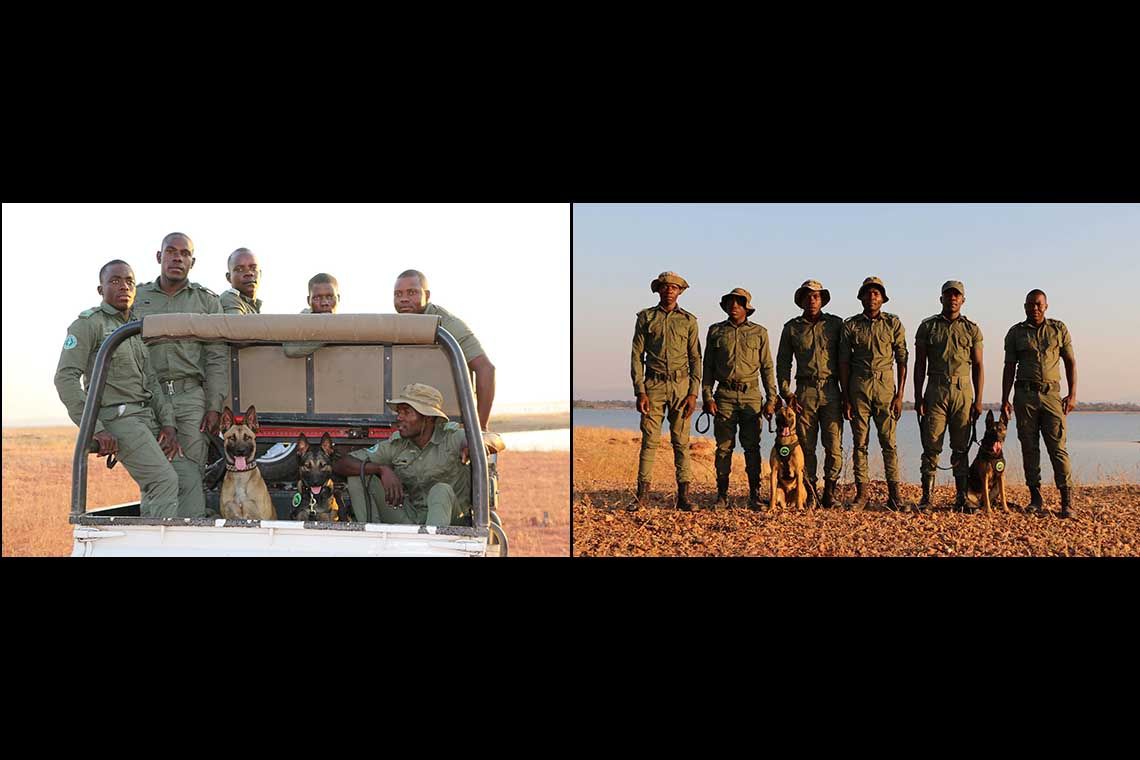
K9 unit flown by Emirates SkyCargo to Zimbabwe begins frontline operations
Vega and Kuda, two specialist conservation dogs, transported by Emirates SkyCargo from London to Harare via Dubai in partnership with UK charity Dogs 4 Wildlife, have arrived safely and acclimatise