CEPA Conference Culminates with Economic Policy Push for Inclusive Growth and Resilience
The Centre for Poverty Analysis (CEPA) marked its 25th anniversary with the inauguration of the International Conference on “Poverty and Development in Times of Crisis”, held at Cinnamon Grand Colombo on 07 and 08 May 2026.
The conference was organised by CEPA in collaboration with the Asian Development Bank and ODI Global.
Bringing together policymakers, researchers, development partners, academics, practitioners and civil society representatives from Sri Lanka and overseas, the two-day conference created a timely platform to examine how societies can protect vulnerable communities, rebuild resilience and advance inclusive development amid repeated economic, social, climate and geopolitical shocks.
The inauguration featured the lighting of the oil lamp, a presentation on “CEPA at a Glance”, a welcome address by Ms. Nelun Gunasekera, Chairperson of CEPA, an address by Ms. Shannon Cowlin, Country Director of the Asian Development Bank, the felicitation of CEPA’s founding members and long-standing team members, an address by Prof. Sirimal Abeyratne, Executive Director of CEPA, a documentary screening, and the keynote address by Dr. Chandranath Amarasekara, Deputy Governor of the Central Bank of Sri Lanka.
Speaking at the event, Prof. Sirimal Abeyratne reflected on CEPA’s 25-year journey as a leading independent think tank focused on poverty and related development challenges.
He noted that CEPA has played an important role in providing evidence-based input to policy processes and public discourse in Sri Lanka.
“Poverty is not just a lack of money. It is a lack of opportunity, a lack of agency, and a lack of dignity,” he stated.
Prof. Abeyratne further emphasised that Sri Lanka’s progress in reducing poverty has been challenged by the COVID-19 pandemic and the recent economic crisis, making it necessary to focus not only on poverty reduction but also on sustainable recovery, resilience, equity and inclusion.
He noted that the next phase of CEPA’s work will require learning from Sri Lanka’s own experience as well as regional and global lessons.
Delivering the keynote address, Dr. Chandranath Amarasekara highlighted the importance of macroeconomic stability, institutional credibility and evidence-based policymaking in protecting the poor and vulnerable during times of crisis.
Drawing lessons from Sri Lanka’s 2022 economic crisis, he observed that crises often emerge when multiple vulnerabilities align, and stressed that policy space must be built before a crisis, not during one.
Dr. Amarasekara also underscored the need for high-quality, timely poverty data and policy-relevant research, stating that institutions such as CEPA have a critical role in translating evidence into actionable insights for a more resilient and inclusive development trajectory.
Addressing the gathering, Ms. Shannon Cowlin congratulated CEPA on its 25th anniversary and commended the organisation for convening a timely dialogue on poverty and development in times of crisis.
She noted that Sri Lanka’s repeated shocks including the tsunami, terrorist attacks, COVID-19 pandemic, economic crisis and emerging geopolitical risks ,have exposed deep vulnerabilities and reversed hard-won development gains.
She further highlighted the importance of building flexibility into policies and programmes, strengthening social protection systems, improving coordination, and ensuring that development responses are resilient enough to protect vulnerable groups, including women, children, older persons and persons with disabilities.
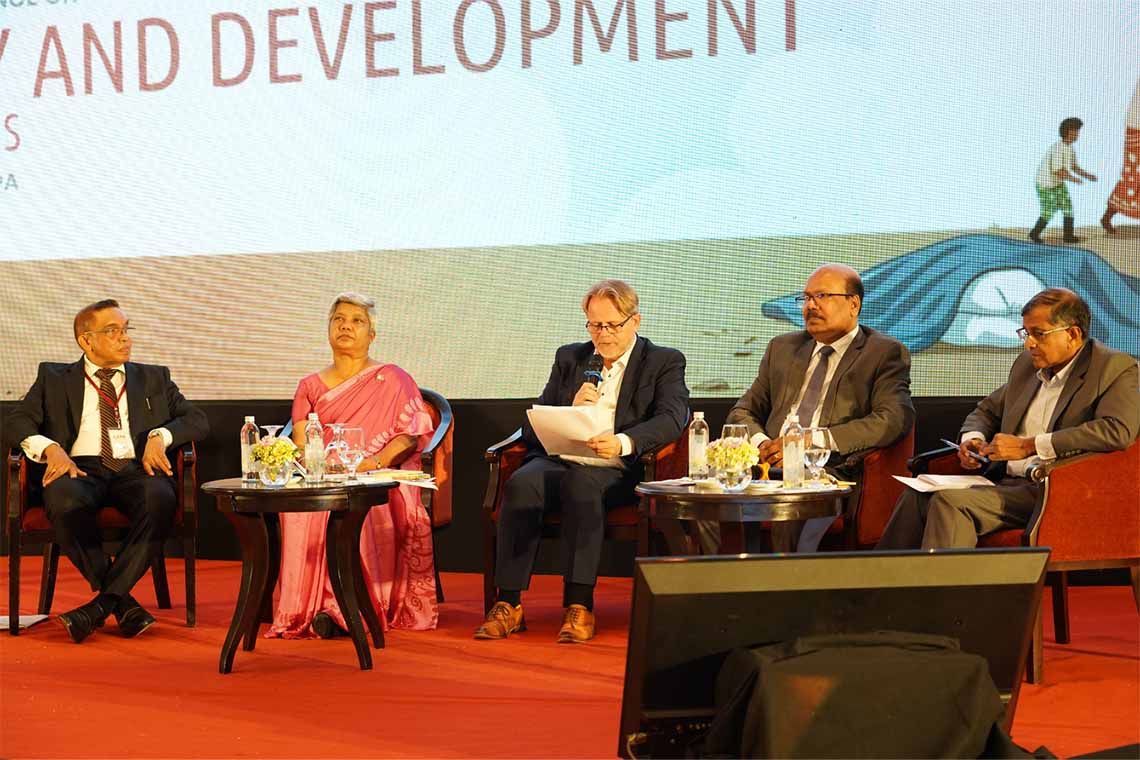
A key highlight of the first day was the high-level plenary session on “Challenges of Trade and Economic Reforms for Growth in Developing Countries in an Uncertain Global Era”, curated by ODI Global and CEPA.
The session was moderated by Prof. Dirk Willem te Velde, Director – International Economic Development Group and Principal Research Fellow at ODI Global, and brought together senior policymakers, economists and development experts to discuss Sri Lanka’s growth prospects in a rapidly changing global environment.
The session featured special remarks by Sir Vince Cable, Distinguished Fellow at ODI Global, who highlighted Sri Lanka’s significant potential to deepen trade relationships, particularly with India and the wider region.
He noted that South Asia remains one of the least regionally integrated parts of the world, despite the considerable economic upside that could be unlocked through stronger regional trade.
He also pointed to opportunities for Sri Lanka to upgrade existing trade arrangements, including the India-Sri Lanka Free Trade Agreement, and explore deeper economic linkages with other major markets.
Mr. K.A. Vimalenthirarajah, Secretary to the Ministry of Trade, Commerce, Food Security and Cooperative Development, observed that Sri Lanka continues to face overlapping vulnerabilities, including external shocks, fiscal pressures, debt sustainability challenges, foreign exchange constraints, governance weaknesses and a widening technological gap.
He noted that while external conditions may remain uncertain, Sri Lanka must focus on building a stable and intelligent policy framework that can respond effectively to these pressures.
Prof. Sirimal Abeyratne, speaking during the plenary, stressed that Sri Lanka’s long-term development challenge lies in sustaining growth while maintaining external balance.
He noted that industrial transformation is essential to create productive opportunities that are less fragile and more sustainable.
While social protection remains important, he emphasised that lasting solutions to poverty must come through the creation of decent economic opportunities that allow people to engage productively in the economy.
Ms. Yvette Fernando, Board Member of CEPA and former Senior Deputy Governor of the Central Bank of Sri Lanka, drew attention to the role of the financial sector in supporting growth, particularly for SMEs.
She noted that many financial institutions are structured around short-term financing, while SMEs often require longer-term, patient capital.
She also emphasised the need to diversify institutions that support enterprise development, modernise agriculture, promote value-added production and strengthen policy coordination across monetary, fiscal and trade policy.
Dr. Ganeshan Wignaraja, Senior Visiting Fellow at ODI Global and Advisor to CEPA, said geopolitical tensions should also be viewed as an opportunity for Sri Lanka, given its strategic location in the Indian Ocean.
He highlighted the potential for Sri Lanka to position itself as a hub for maritime trade, finance, professional services and digital trade.
He further noted that reforms in trade facilitation, customs, digital payments and cybersecurity would be essential to unlock the country’s export and services potential.
Prof. Prabir De, Professor at the Research and Information System for Developing Countries in New Delhi, highlighted the importance of deeper regional cooperation, particularly between Sri Lanka and India.
He noted that global instability has made it increasingly important for countries to reduce overdependence on single partners and strengthen regional systems, including shipping, movement of people, trade, sustainability cooperation and frameworks such as BIMSTEC.
Summarising the discussion, Prof. te Velde noted that the plenary had brought together critical insights on trade as a driver of opportunity, the role of finance and SMEs, agriculture modernisation, Sri Lanka’s geographic and regional potential, macroeconomic risks, and the urgent need to strengthen regional trade integration.
The conference programme also included 18 thematic tracks covering economic systems and policy, systemic resilience, poverty and political economy, macro governance, social protection, climate systems, climate livelihoods, gender and youth agency, trade liberalisation and poverty, educational inequality, artificial intelligence and digital inclusion, urban poverty systems, food security and sustainable agriculture, employment and livelihoods, governance gaps, social vulnerability policy, skills for the future, and a Young Researchers’ Platform.
The second day of the conference featured discussions on inequality in Sri Lanka, as well as national strategies and donor partnerships for promoting growth and poverty reduction.
The conference concluded by reinforcing the need for shared conversations between researchers, policymakers, development partners and practitioners.
As Sri Lanka continues its recovery journey, CEPA’s 25th anniversary conference highlighted the importance of evidence, institutional reform, inclusive growth, trade-led opportunity creation, regional cooperation and resilient social protection in ensuring that future development pathways do not leave vulnerable communities behind.
Photo caption - The plenary session was conducted by Prof. Dirk Willem te Velde, Director – International Economic Development Group and Principal Research Fellow at ODI Global. The session featured Prof. Sirimal Abeyratne, Executive Director of CEPA; Dr. Ganeshan Wignaraja, Senior Visiting Fellow at ODI Global and Advisor to CEPA; Ms. Yvette Fernando, Board Member of CEPA and former Senior Deputy Governor of the Central Bank of Sri Lanka; Mr. K.A. Vimalenthirarajah, Secretary to the Ministry of Trade, Commerce; and Prof. Prabir De, Professor at the Research and Information System for Developing Countries in New Delhi. Sir Vince Cable, Distinguished Fellow at ODI Global, joined the session virtually.
Latest Posts










Video
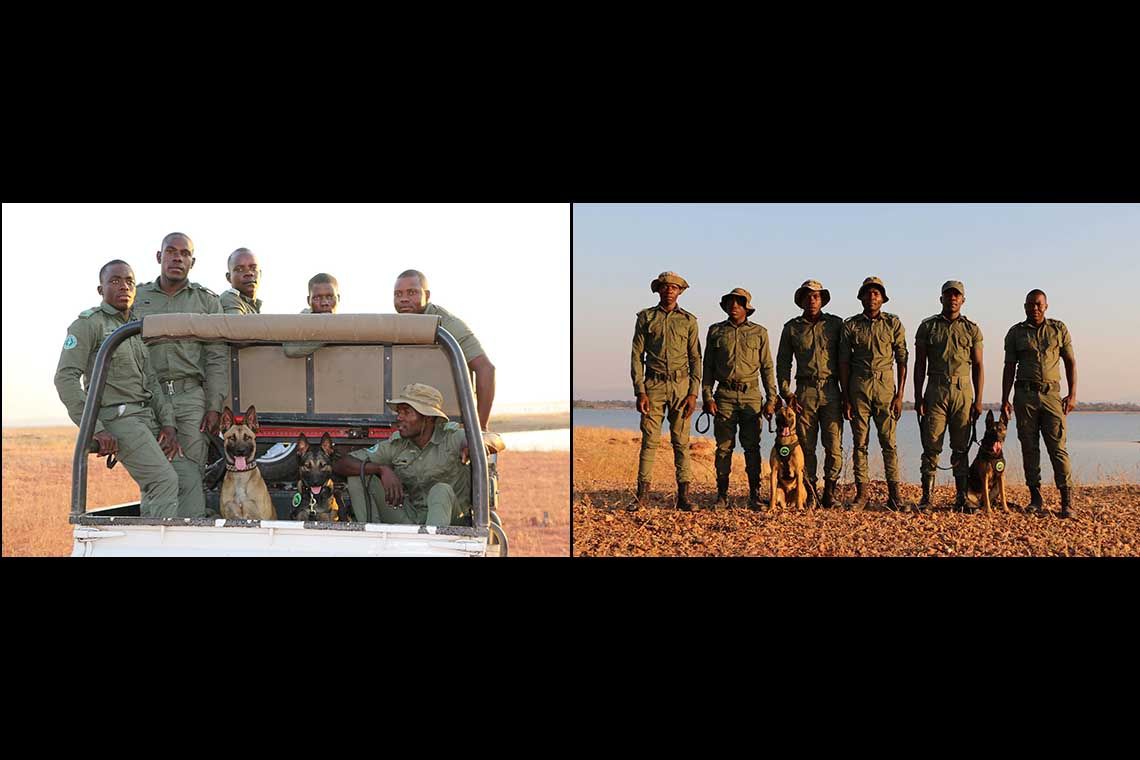
K9 unit flown by Emirates SkyCargo to Zimbabwe begins frontline operations
Vega and Kuda, two specialist conservation dogs, transported by Emirates SkyCargo from London to Harare via Dubai in partnership with UK charity Dogs 4 Wildlife, have arrived safely and acclimatise