Reviving Primary Care in the Plantation Sector : Horana Plantations’ Emerging Healthcare Model
Sri Lanka’s public health system is widely recognised for its reach and resilience, yet its distribution of resources has never been uniform.
The contrast is visible between urban centres with established hospitals and rural or estate communities that must navigate distance, limited transport, and fragmented primary care.
Improvements are visible in many regions, particularly in maternal and child health, but the broader system remains a work in progress.
Against this backdrop, the transformation unfolding at Horana Plantations PLC (HPL) represents a steady, practical model for strengthening estate-level primary care through collaboration, consistent clinical leadership, and alignment with public health services.
A Structural Landscape Still in Transition
Estate healthcare historically developed as a labour-maintenance structure during the colonial period.
After nationalisation in the 1970s and privatisation in the mid-1990s, the responsibility for service provision shifted, but without the full absorption of estate facilities into the public health network.
The expectation in 2012, when discussions about conversion of estate units into government-run facilities began, was that standardisation would improve quality.
In practice, chronic underinvestment, staff shortages, and limited incentives for medical officers to take up rural postings slowed progress.
This uneven trajectory is why estate communities continue to face the dual challenge of distance and incomplete integration.
Even in districts like Nuwara Eliya, where health outcomes have improved markedly, gaps in referral pathways and emergency response remain a daily reality.
Within this environment, incremental and coordinated approaches — rather than large-scale institutional changes — often produce the most immediate gains.
A Different Kind of Estate Medical Unit
At HPL’s Gouravila Estate, the estate medical unit operates under a hybrid structure that combines company welfare support, PHDT coordination, and oversight from the Ministry of Health.
A key difference in this estate is the presence of a full-time MBBS doctor — a rarity in the estate sector, where health units are typically staffed by Estate Medical Assistants.
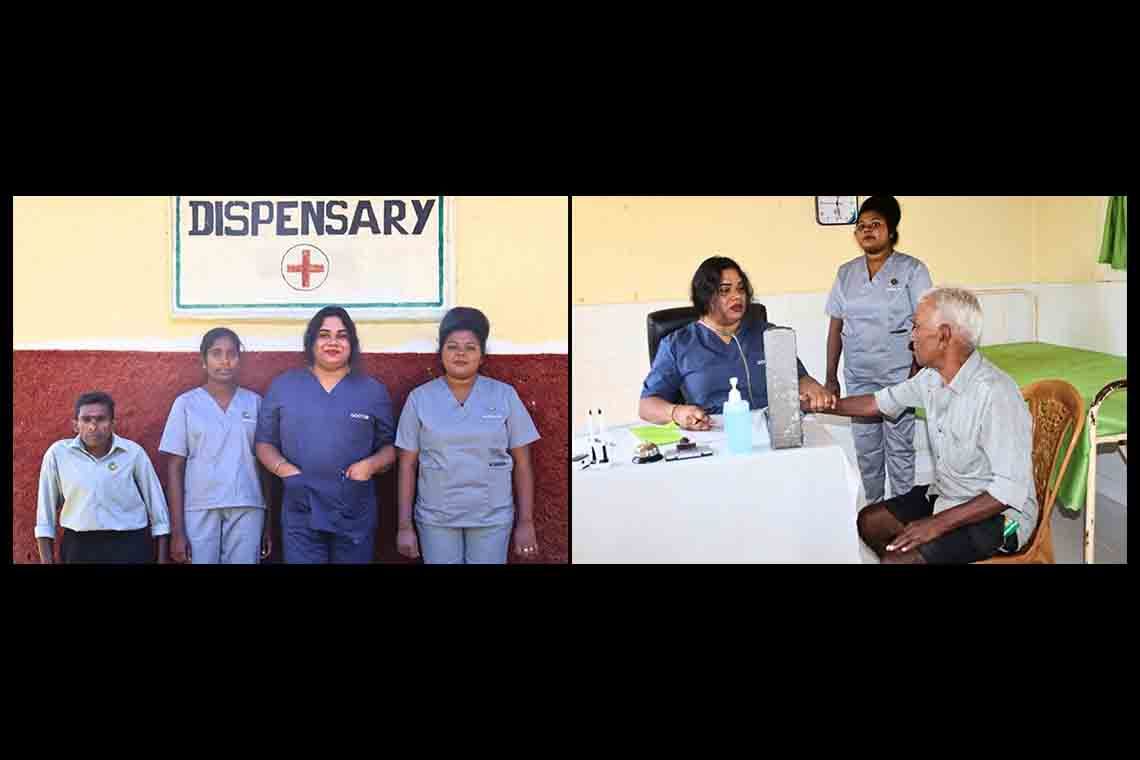
The unit is led by Dr. Suba Simme Rajanayake, MBBS (Sri Lanka), who trained at the National Hospital of Sri Lanka and later served in the Intensive Care Unit at the Matara District General Hospital.
Fluent in Sinhala and Tamil, she brings experience in high-acuity care to a setting where early detection and regular follow-up can alter long-term outcomes.
Her decision to take a sabbatical from public service to work full-time in an estate community is unusual, but not accidental.
Dr. Rajanayake comes from a family with roots in Kerala, where her grandfather once worked in a supervisory role on an estate.
She describes this early exposure as shaping her interest in communities whose contributions to the economy often go unseen. “Service, not salary, is what guides my work,” she says.
Clinical Consistency as the Turning Point
With a qualified medical officer embedded in the community, the estate unit has shifted from episodic treatment to structured primary care. Residents now receive routine examinations, chronic disease monitoring, and referral-based follow-up in line with district protocols.
Over the past year, this continuity has surfaced several undiagnosed conditions — hypertension, diabetes, early kidney disease — allowing earlier management than typically seen in estate contexts.
In one instance, a resident with years of vague symptoms learned through routine assessment that he had a congenital single kidney, prompting immediate referral and lifestyle counselling.
In another case, a community screening facilitated by HPL and PHDT identified early-stage breast cancer; the patient underwent surgery and has since returned to regular work.
The Gouravila estate has also created a simple emergency transfer arrangement with identified transport facilities, reducing delays in transporting patients to functioning government hospitals.
While this is not a substitute for ambulances, the company also maintains three ambulances to ensure timely emergency medical support – addressing a practical gap many estate communities face outside regular working hours.
Integration With Public Health Systems
A significant milestone for the Gouravila unit was its re-designation under the Public Health Service, enabling it to receive essential medicines through government supply chains.
This is the first time an HPL estate facility has been formally integrated into the government’s medicine distribution network, improving availability of treatment for chronic and acute conditions without duplicating procurement systems.
The estate team works closely with Medical Officers of Health, midwives, and PHDT officials on maternal care, nutrition interventions, and health education.
Instead of functioning as a standalone estate clinic, the unit connects to district-level reporting, referral pathways, and disease surveillance, aligning with the government’s broader primary healthcare reforms.
Addressing Women’s Health and Everyday Barriers
Health literacy remains an area where incremental improvements can create outsized effects. Cultural taboos around menstruation, limited access to hygiene materials, and practical issues such as inadequate washing and drying facilities affect both work participation and adolescent school attendance.
To address these challenges, HPL’s She-Essentia initiative combines healthcare with livelihood support.
Women in the community produce reusable sanitary napkins, which are distributed alongside menstrual health education delivered by Dr. Rajanayake and likeminded doctors representing NGO’s as well as the Women’s Development Centre.
More than 1,000 women and girls have participated in these sessions, which also cover nutrition, reproductive health, and psychosocial concerns.
Rather than claiming large-scale transformation, the programme focuses on reducing everyday barriers that influence health over time.
Early feedback suggests that girls are missing fewer school days during their menstrual cycles, though long-term outcome tracking is ongoing.
A Model Built on Realistic Possibilities
The strength of HPL’s model lies in its practicality. It does not attempt to replicate the services of district hospitals, nor does it position the estate medical unit as a complete alternative to government facilities.
Instead, it fills a critical space in primary care: early identification, preventive support, consistent follow-up, and community trust.
This approach recognises that Sri Lanka’s estate healthcare system is still transitioning toward full integration.
While national-level reforms continue, estate companies can complement public services in ways that are feasible, sustainable, and aligned with public health priorities.
Dr. Rajanayake’s presence anchors this structure, but the model’s effectiveness depends on coordination — with MOHs, PHMs, welfare officers, PHDT, and the company’s own community development teams.
Looking Ahead
Estate healthcare in Sri Lanka is not a solved problem, but neither is it static.
Models like HPL’s demonstrate how incremental shifts — grounded in clinical consistency, community participation, and alignment with public systems — can strengthen primary care in meaningful ways.
For the families living and working on these estates, the result is not a dramatic transformation, but something just as important: predictability, continuity, and access to a level of care that recognises both their contribution and their rights as citizens.
Captions - Dr. Rajanayake (second from the right) with her team and Dr. Rajanayake examining a patient.
Latest Posts








Video
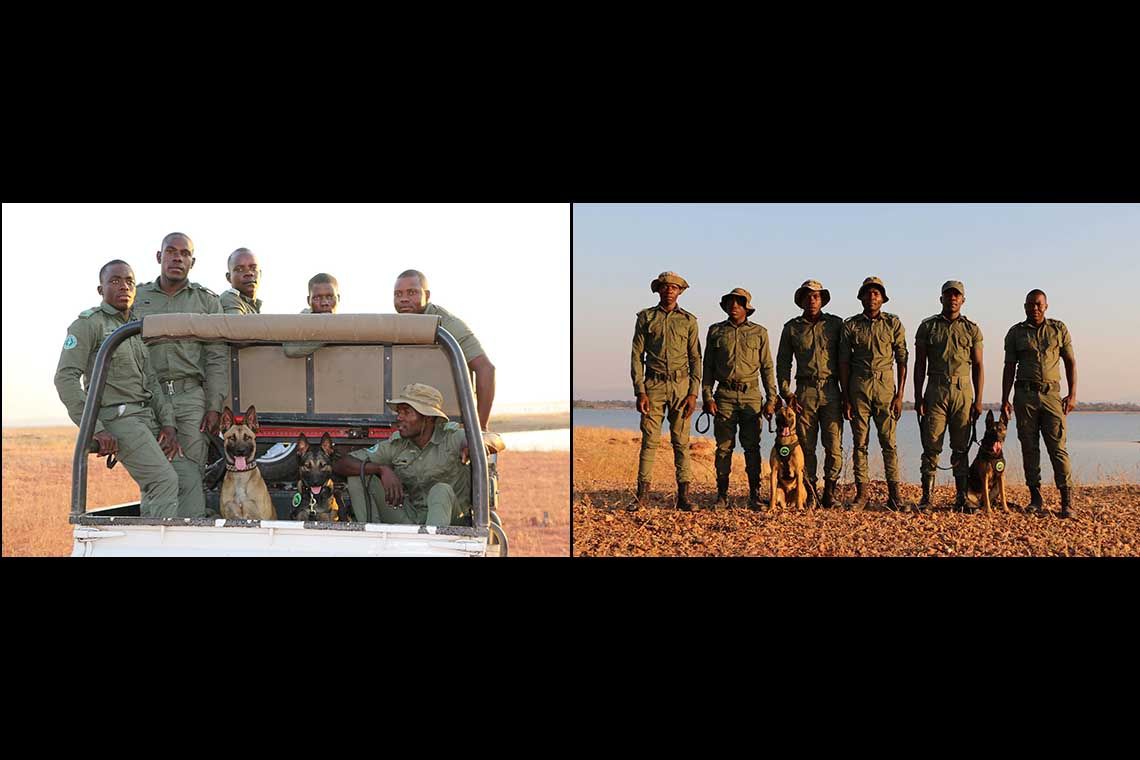
K9 unit flown by Emirates SkyCargo to Zimbabwe begins frontline operations
Vega and Kuda, two specialist conservation dogs, transported by Emirates SkyCargo from London to Harare via Dubai in partnership with UK charity Dogs 4 Wildlife, have arrived safely and acclimatise