Twenty-Five Years of Not Looking Away by Rebecca Jayatissa, Communications Professional – CEPA

As the Centre for Poverty Analysis marks a quarter century of work, Sri Lanka has cause to reflect on what independent research has meant for the country's most vulnerable communities.
In May 2001, nine professionals working on poverty-related issues in Sri Lanka came together around a shared conviction: that this country needed an institution willing to look at poverty honestly, to gather evidence that policymakers need but rarely seek, and to make sure the people most affected by poverty were never reduced to abstractions in a government report.
That conviction became the Centre for Poverty Analysis, known as CEPA.
Twenty-five years later, CEPA stands as Sri Lanka’s leading independent think tank on poverty and development, with a team of thirty researchers and a portfolio that spans six thematic areas.
The country it works in looks very different from the one it was founded in.
Sri Lanka has lived through the end of a decades-long civil war, a tsunami that reshaped entire coastlines, a global pandemic, and the worst economic crisis since independence.
Each of these upheavals changed the face of poverty in Sri Lanka. None of them changed the need to understand it.
A think tank with a point of view
CEPA is an independent, not-for-profit organisation.
It does not represent any government or political interest, and from the beginning it has operated on the principle that its research must be honest regardless of who funds it.
At the heart of everything CEPA does is a belief that most people in public life share but rarely say plainly: poverty is not inevitable.
It is the result of failures in policy, in systems, and in the choices made by those with the power to make different ones.
It is the conviction that determines what CEPA studies, how it communicates what it finds, and who it considers its ultimate audience.
What the research has shown
When CEPA began, poverty in Sri Lanka was understood largely as a development challenge: a story of individuals and households left behind by the mainstream.
Over two and a half decades, that picture has become considerably more complex.
Poverty is woven into failures of policy, infrastructure, social norms, and economic systems, and addressing any one of them requires understanding all the others.
CEPA’s research spans six areas: social protection and basic services; natural resources and climate change; livelihoods, employment and migration; social cohesion and reconciliation; gender and development; and, added more recently in response to the economic crisis, growth and economic transformation.
The work within each of these areas has consistently brought to light realities that were being overlooked entirely.
Research on period poverty in estate communities found that girls were losing weeks of schooling every year because of stigma and a lack of basic facilities.
What looked like an individual problem turned out to be a structural one, and one with a direct cost to educational outcomes.
Research on the care economy made visible the vast unpaid labour that sustains Sri Lankan households, work that never appears in economic planning because it is never counted.
Work on post-war communities gave voice to people in Trincomalee, in the North and East, whose experiences of recovery looked nothing like the national narrative.
On the international stage, CEPA has worked with the Asian Development Bank, UN Women, the International Labour Organization, UNDP, the World Bank, and ODI Global, among others.
It has contributed to national biodiversity and climate plans, supported the evaluation of major development programmes, and provided technical expertise across a wide range of policy areas.
All of its research is published in Sinhala, Tamil, and English, a commitment to ensuring the work reaches the communities it is about.
When the crisis forced a rethink
The 2022 economic collapse changed the nature of the problem.
What had long been a development story, about communities left behind by the mainstream, had become a macroeconomic one.
Debt default, spiralling inflation, a collapsing currency, and economic contraction were not pushing people gradually toward poverty.
They were pulling millions across the poverty line at once.
In response, CEPA deepened its focus on economic transformation and growth. In partnership with ODI Global, the organisation convened an independent growth study group whose findings were published as Sustaining Transformative Growth in Sri Lanka, 2025 to 2030, a policy roadmap for sustainable and inclusive recovery.
Seminars were held at the University of Peradeniya and the University of Ruhuna to take the research to academic communities directly.
The work put into sharper focus something CEPA had argued for years: that poverty cannot be addressed without addressing the economic conditions that produce it.
The conversation at twenty-five
To mark its anniversary, CEPA is hosting an International Conference on Poverty and Development in Times of Crisis on 7 and 8 May 2026 at Cinnamon Grand Colombo, in collaboration with the Asian Development Bank.
Researchers, policymakers, practitioners, and scholars from Sri Lanka and the wider region will gather to ask the questions this moment demands: what does poverty mean in a world of compounding crises?
What does development require when economic shocks, climate change, and geopolitical uncertainty arrive at the same time? And who bears the cost when policy fails?
Sri Lanka in 2026 is a country in recovery, but the recovery is uneven.
Millions who fell into poverty during the crisis years have not yet regained their footing.
The decisions being made now, on trade, social protection, investment, and climate, will determine who benefits and who continues to be left behind.
These are the questions CEPA was founded to engage, and twenty-five years on, they remain as pressing as ever.
CEPA was founded in 2001 on the belief that independent, honest research is one of the most valuable contributions an institution can make to a country.
Thirty people carry that work forward today. Sri Lanka has changed beyond recognition over the past quarter century, and poverty has shifted with it.
The founding belief, that poverty is a failure and not a fate, has carried through every crisis, every study, and every generation of the team.
Latest Posts









Video
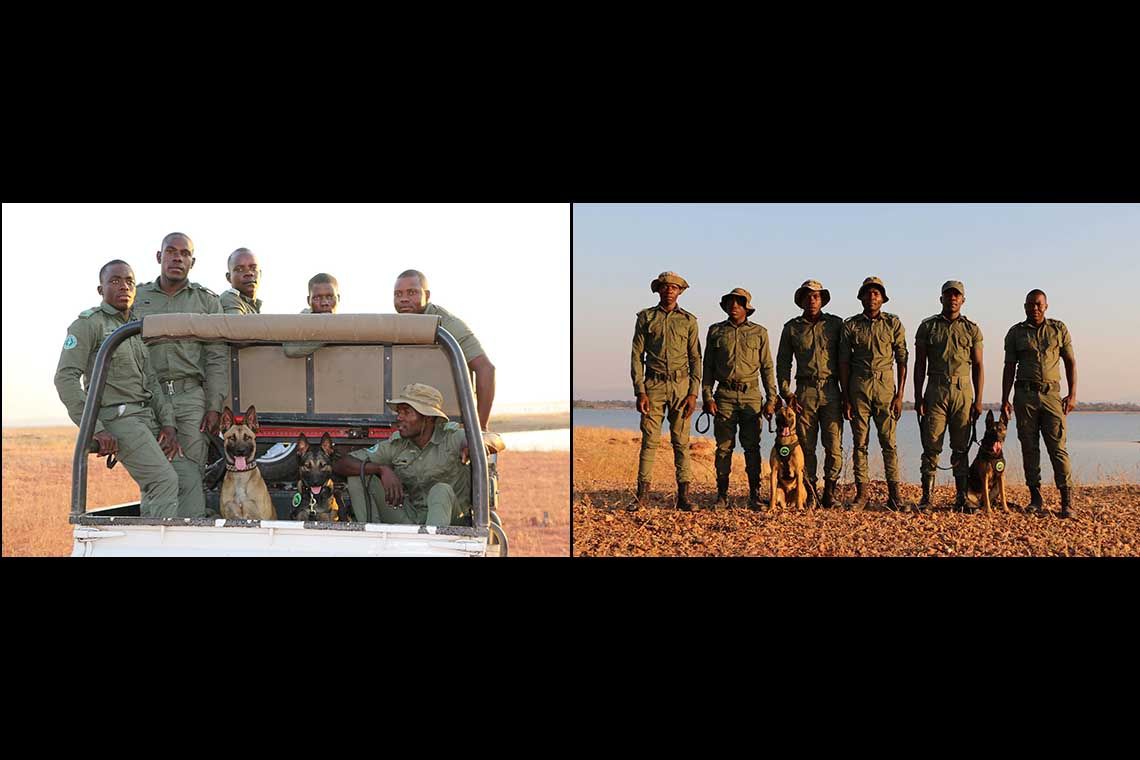
K9 unit flown by Emirates SkyCargo to Zimbabwe begins frontline operations
Vega and Kuda, two specialist conservation dogs, transported by Emirates SkyCargo from London to Harare via Dubai in partnership with UK charity Dogs 4 Wildlife, have arrived safely and acclimatise